
EDITED v. 46
To Be Renamed!
Identifying and Improving Generic or Incorrect Object Names in Museum Databases
| 8 | 59 | 49 |
|---|
Event finish
Research
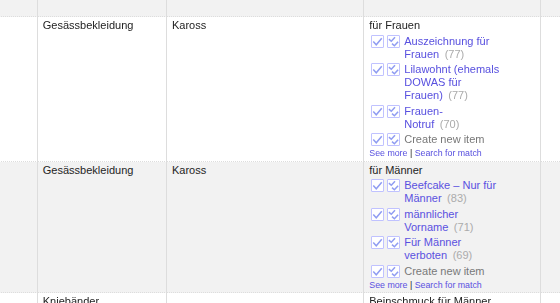
Reconciling the "Gebrauch" (use) column of the data with Wikidata worked well when the values followed the usual pattern.
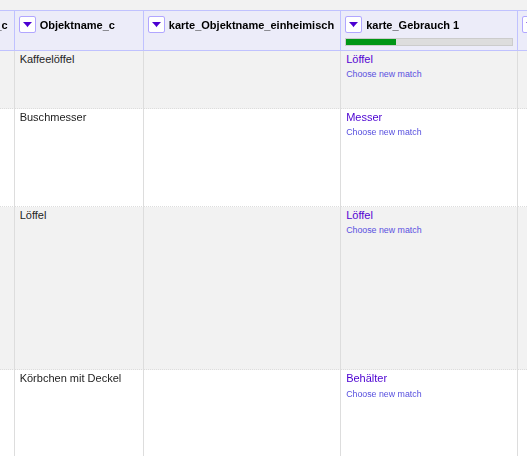 It was more difficult when the "use" didn't make sense without the object title to guide us.
3 days ago
~
rae_knowler
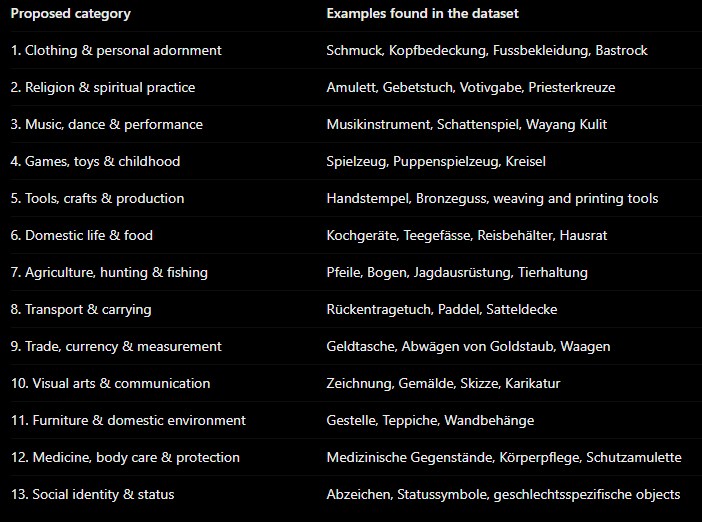
While testing methods, we also asked ChatGPT for classifications using the prompt: "Attached are descriptions from a German ethnographic collection of over 60,000 objects. Assist in generating categorizations by clustering the entries based on its internal contents, and also compare with the categorizations other German/similar ethnographic collections".
3 days ago
~
Nwade01
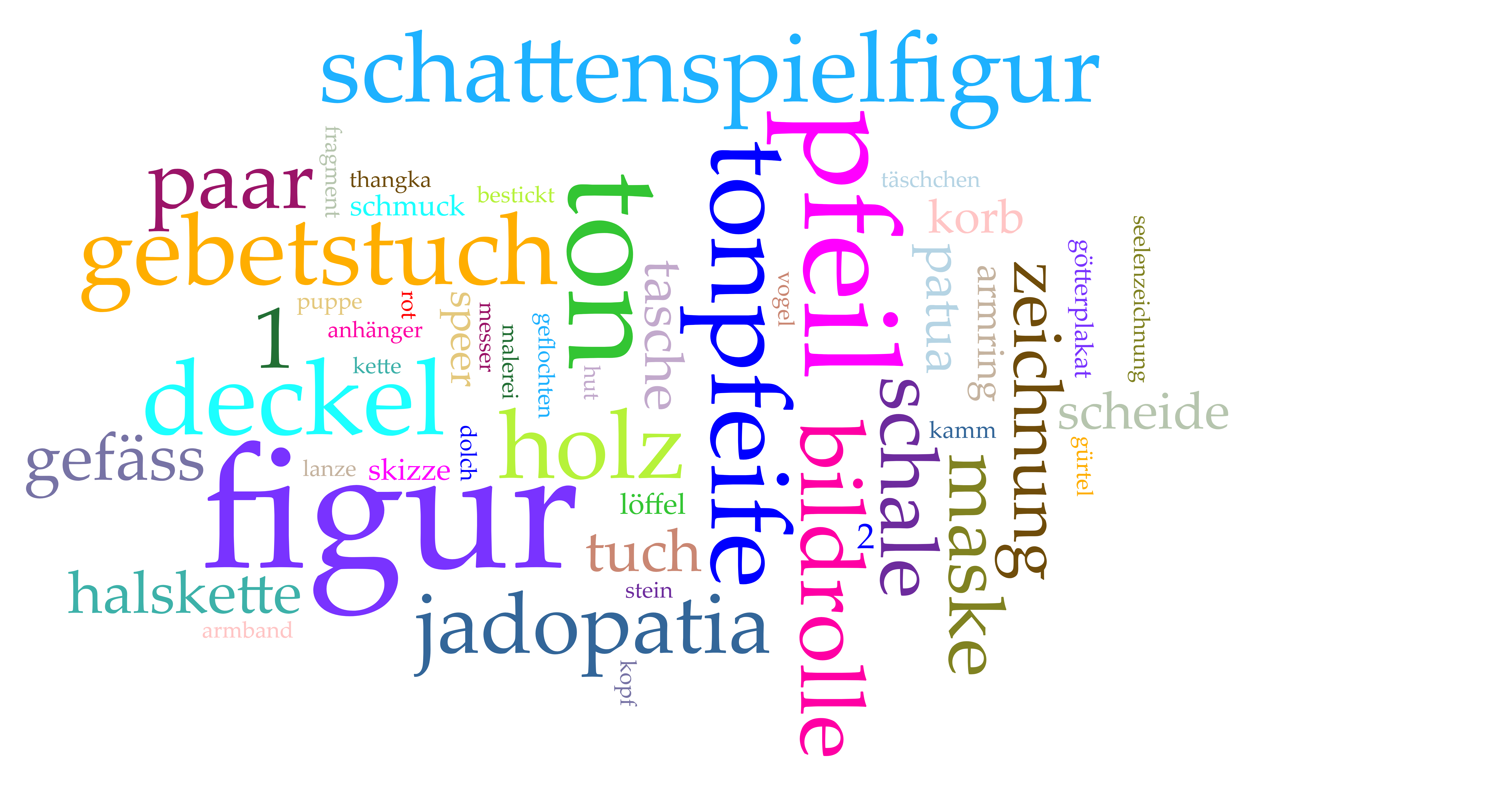
Created an text visualization for both the Objekt Name and the Karte Gebrauch columns to see the most common labels from the original database.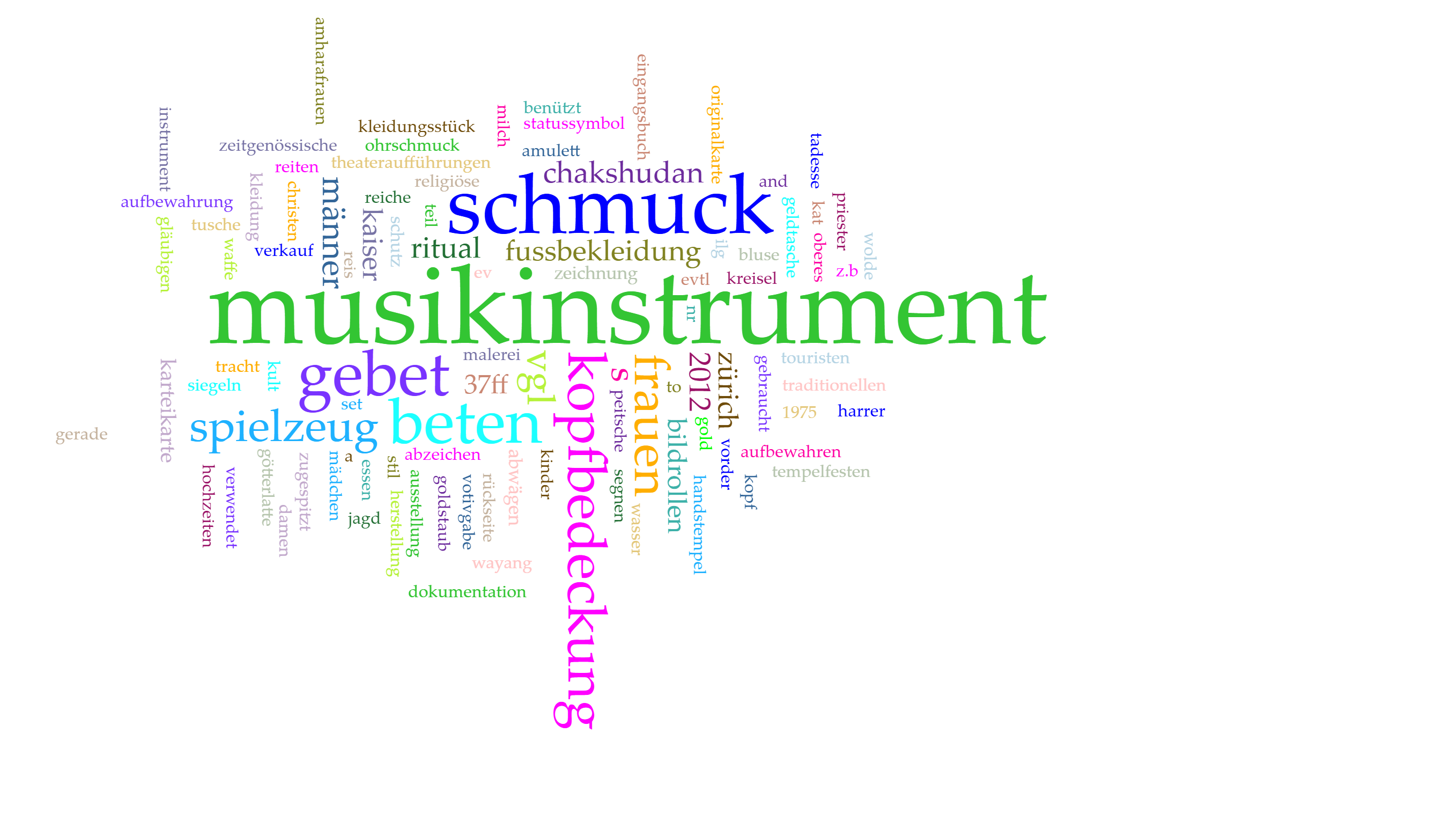
3 days ago
~
Nwade01
JOINED
3 days ago
~
tim_rudiger
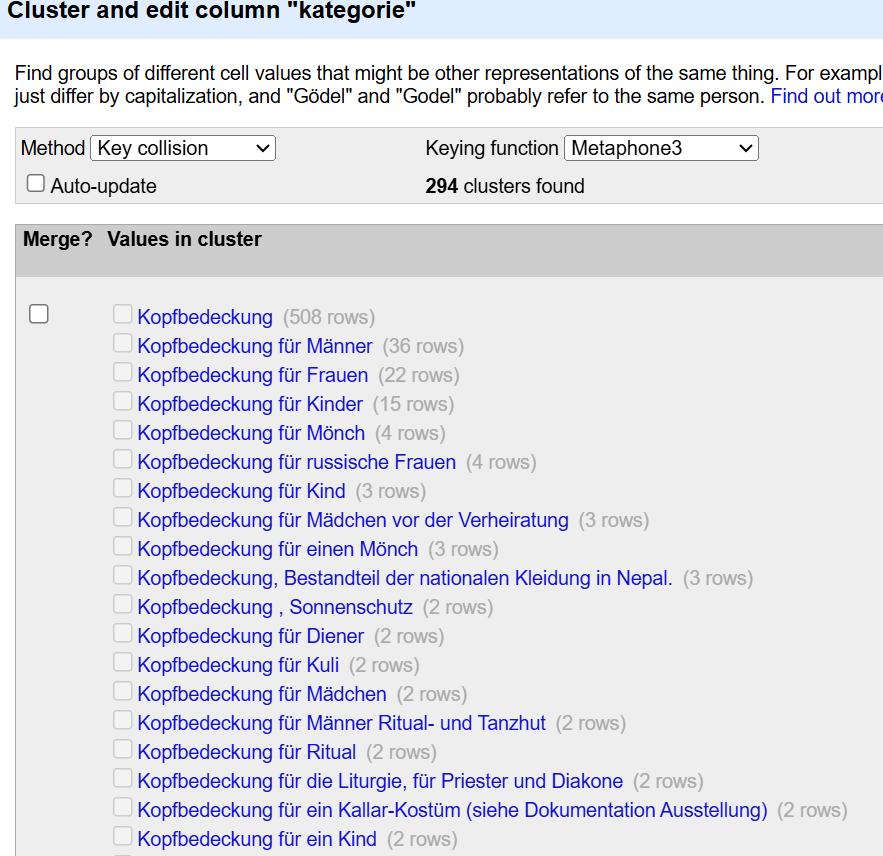 Most of the time it does work and saves us a lot of time with cleaning and labeling the data.
3 days ago
~
lina
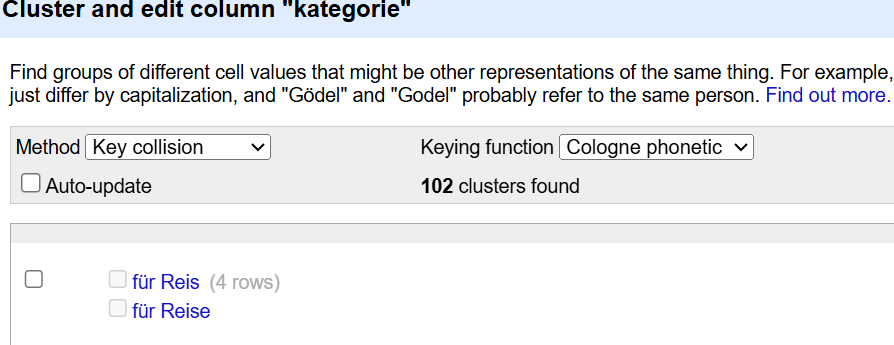
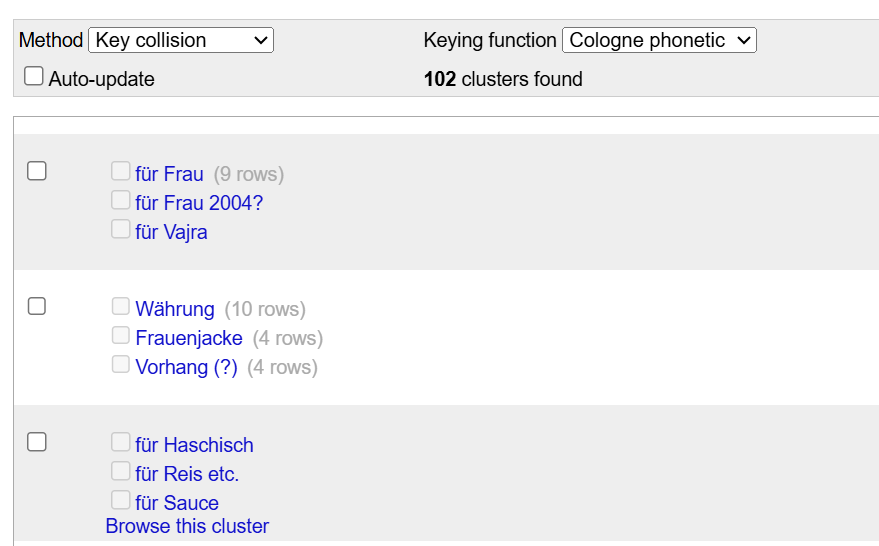 Sometimes auto-clustering can go wrong...
3 days ago
~
lina
Ideas for further exploration
Two possible approaches:
-
Create a new field for subject headings → generic term Investigate whether there are established vocabularies that could be adopted (or adapted). Review how other museums handle subject headings and terminologies.
-
Use the “Object Name” field → specific term (as specific as possible) Review concrete examples from Tim’s comparative cases to determine how specific object designations are applied in practice.
4 days ago
~
Daniela
4 days ago
~
RebekkaSutter
The VMZ's catalogue database can export the images of a subset of items (the result of a query, like "All items with question marks in their title"). Unfortunately, it can only export the images as a PDF. I wrote a quick script to extract all the images from the PDF and save them with the item id as the file name: https://gist.github.com/bellisk/c0d80fda6d21d14d45a37fffa4f1a333
4 days ago
~
rae_knowler
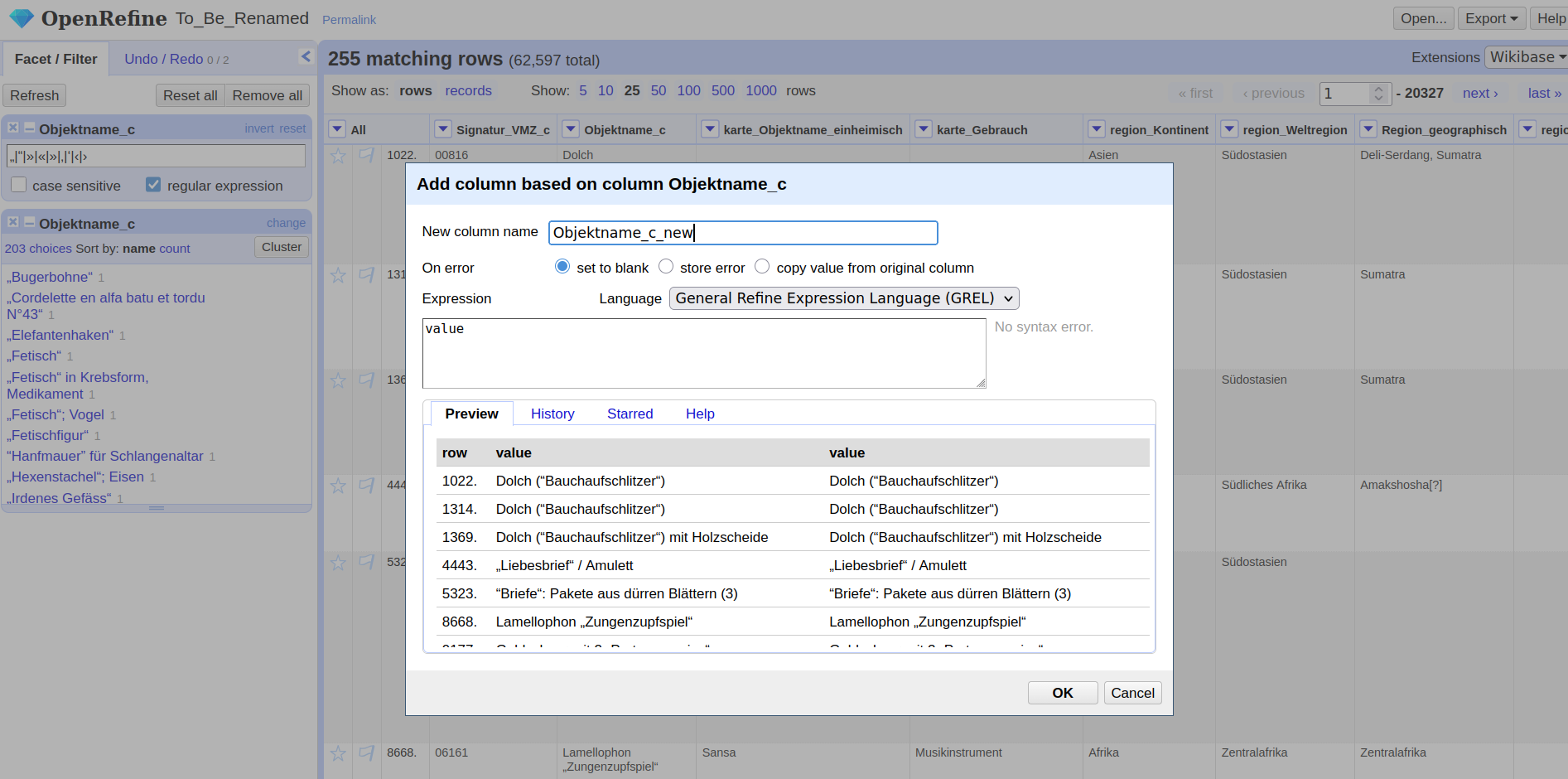
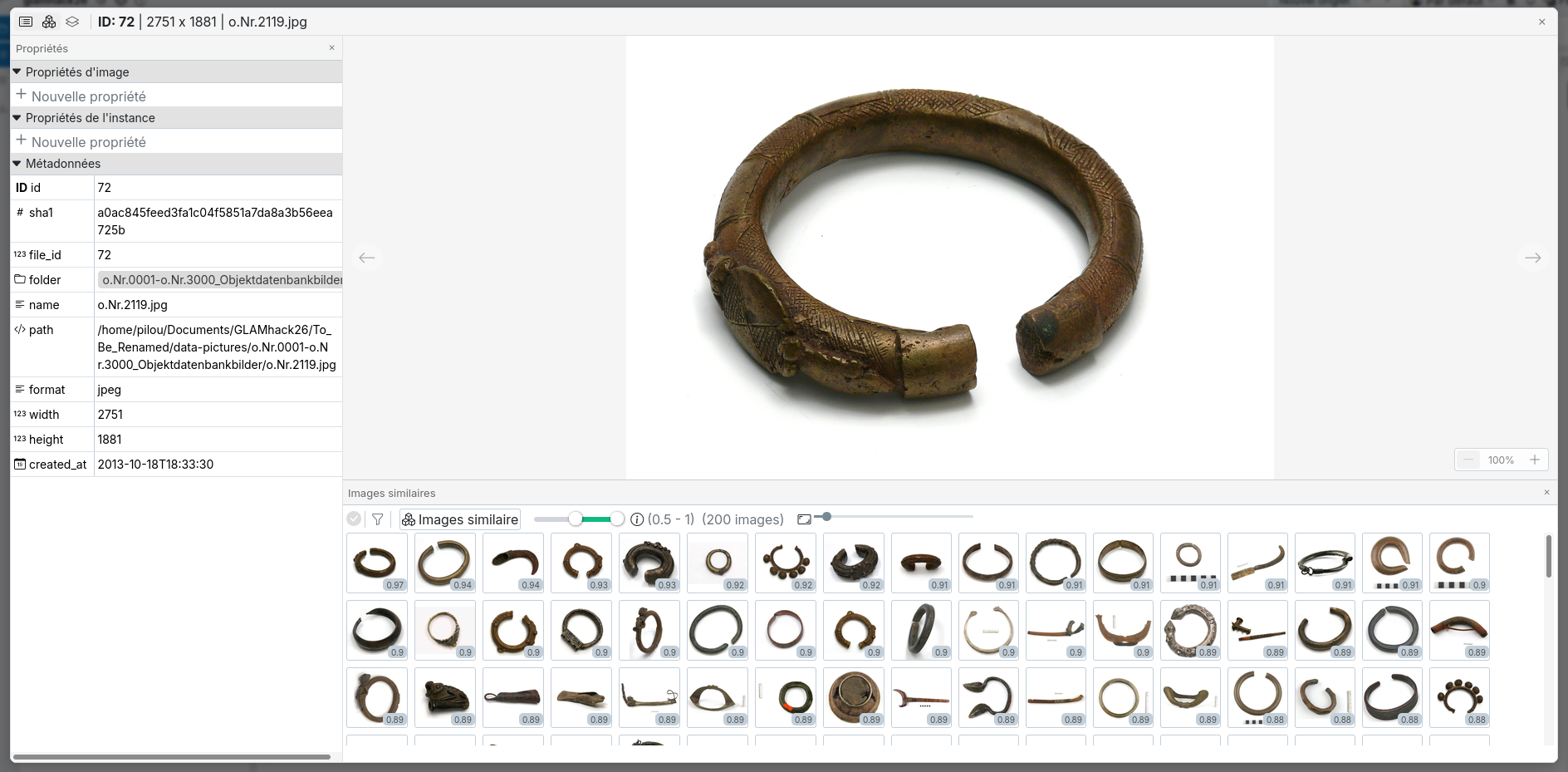
We experimented with OpenRefine to rename objects (see screnshot). We also experimented with the application Panoptic (by CERES) for image similarity in locally stored pictures (see screenshot).
4 days ago
~
piloublan
4 days ago
~
piloublan
4 days ago
~
RebekkaSutter
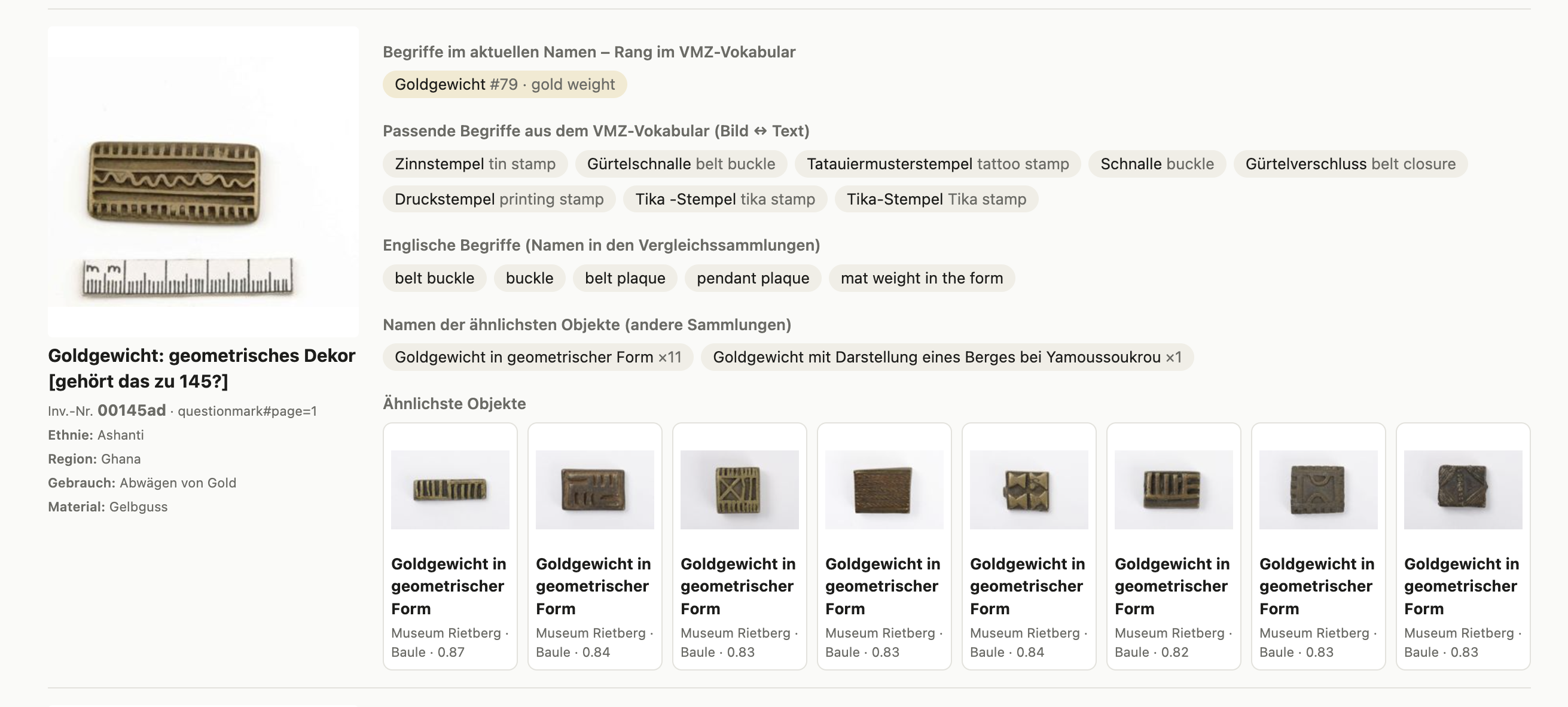
4 days ago
~
RebekkaSutter
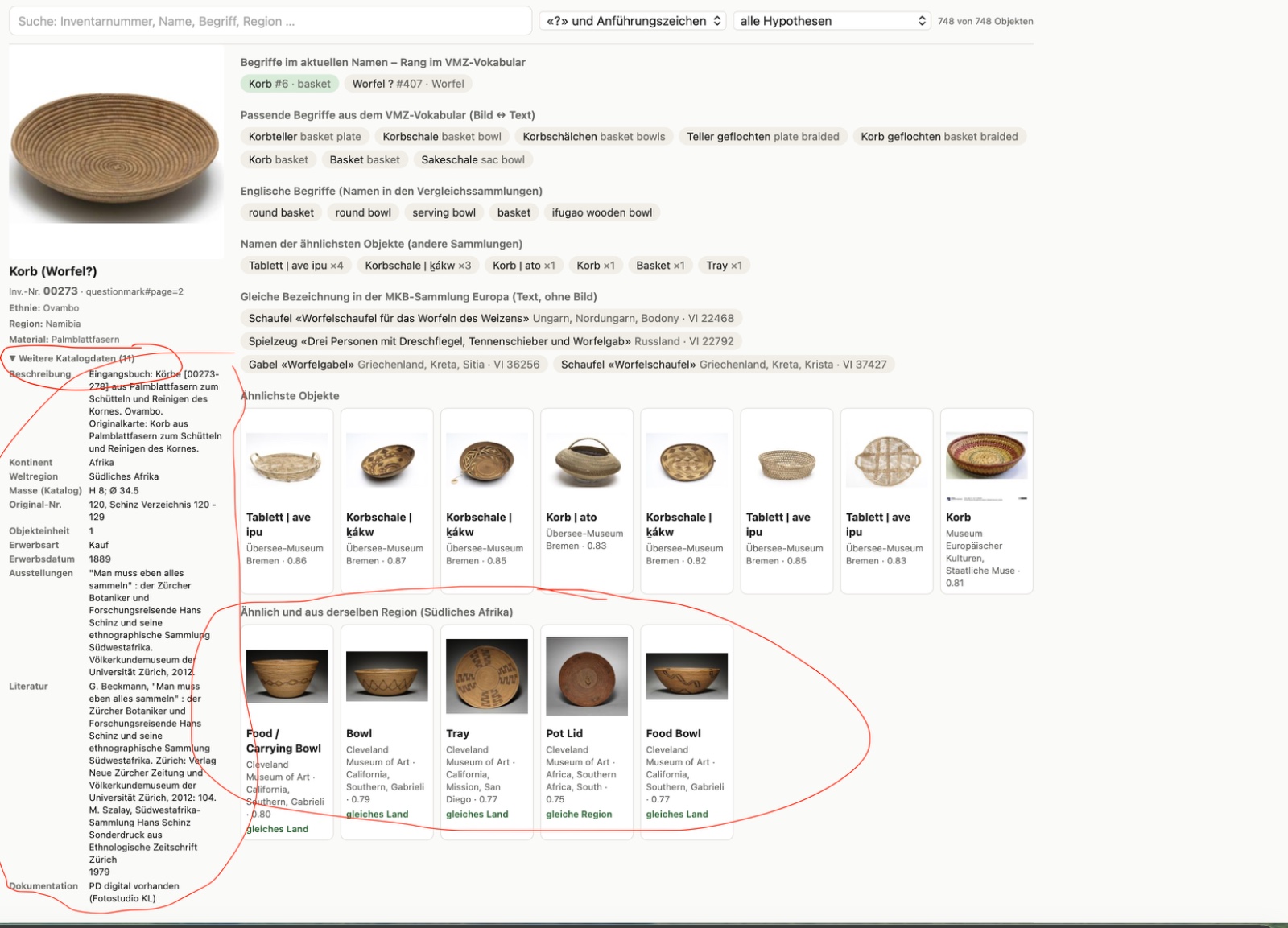
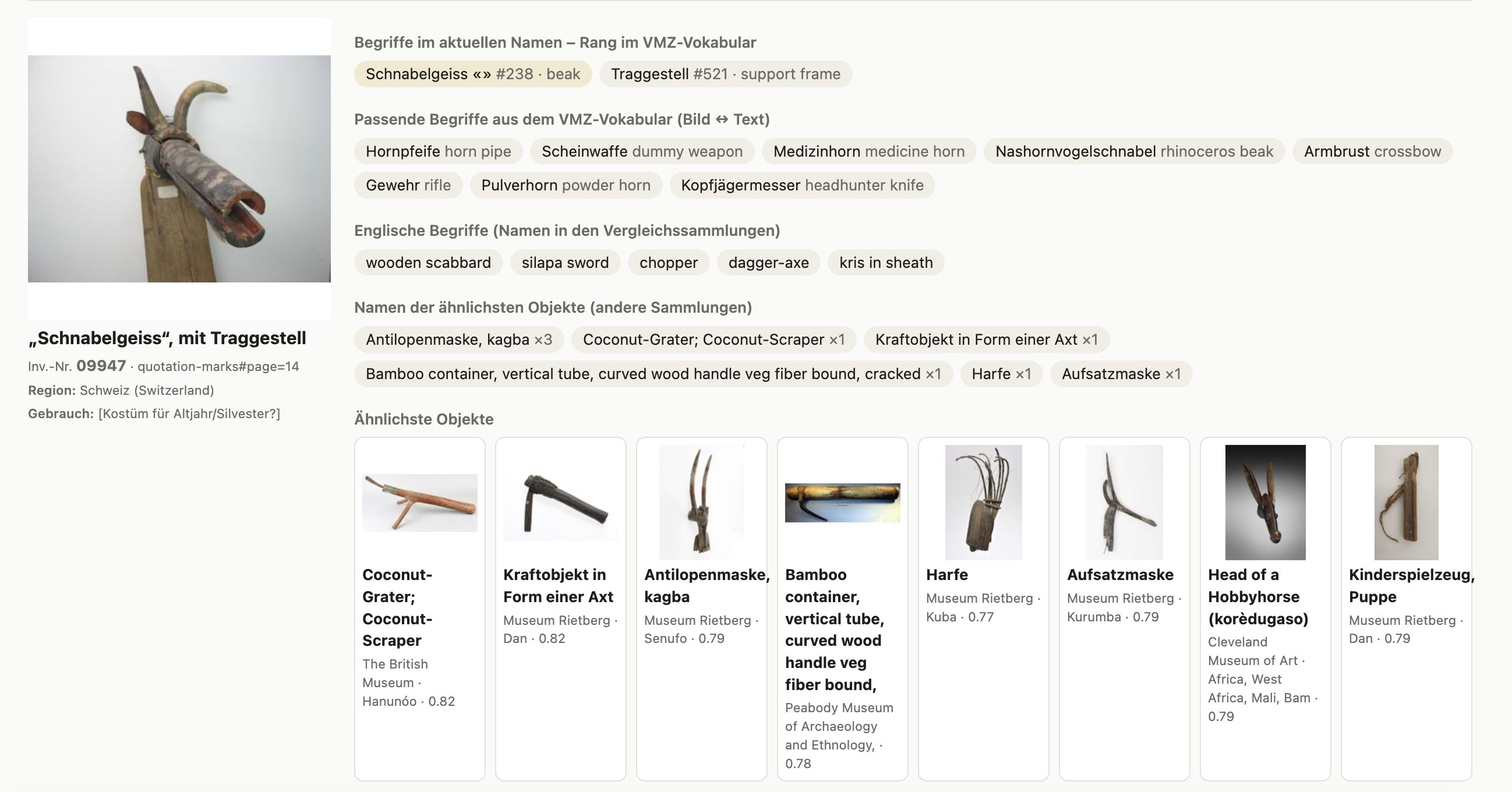
break-through: Tim used embedded models and public API's to grab object photos from other collections - allowed to do a visual comparison of all VMZ-objects which contain a "?" in the object name
4 days ago
~
RebekkaSutter
for IIIF newbies: https://medium.com/@adam.coulson/first-steps-into-iiif-8eb5f33b2b18
4 days ago
~
RebekkaSutter
new approach!!: is there a IIIF Manifest for image similarity?
4 days ago
~
RebekkaSutter
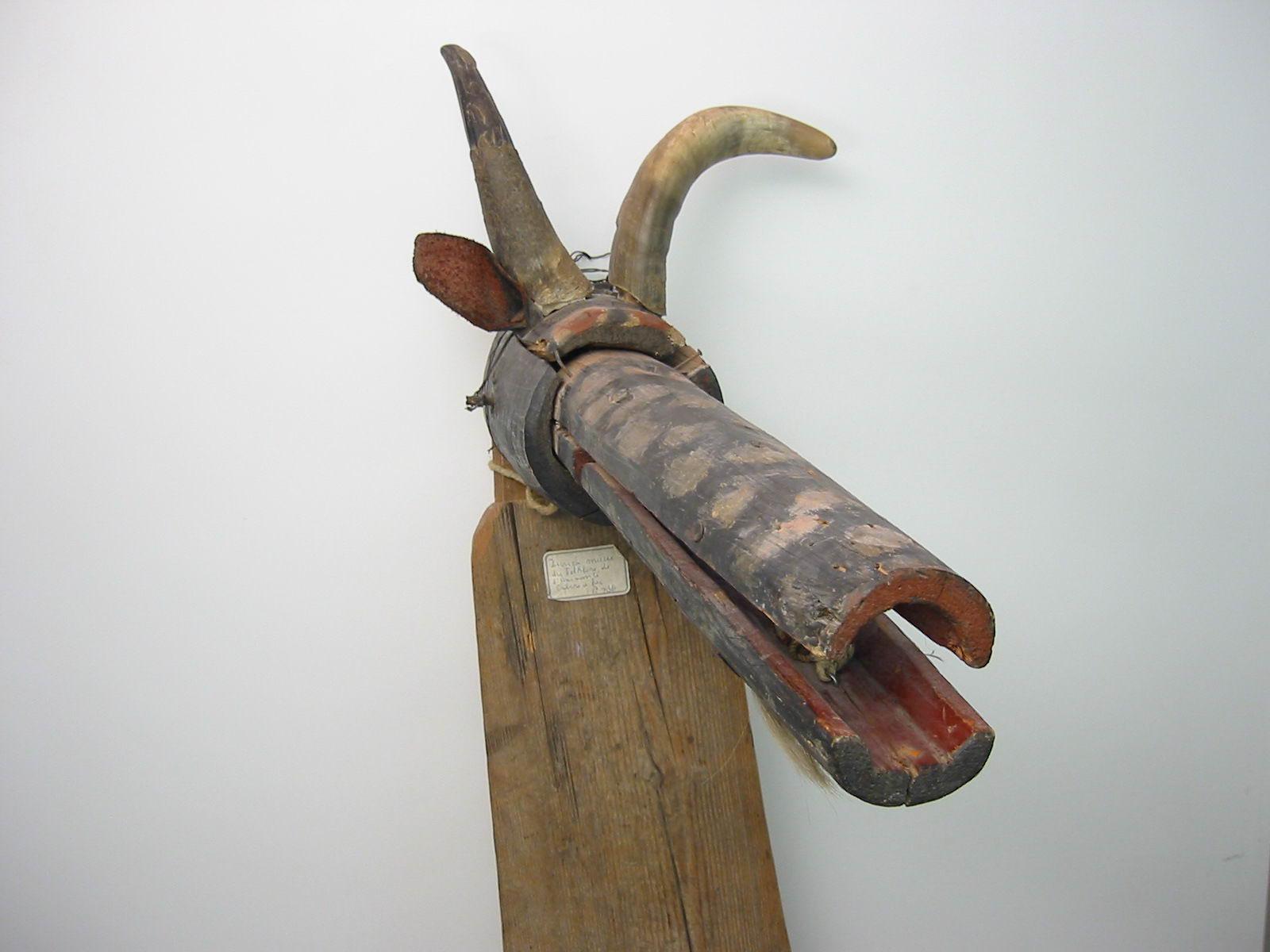
4 days ago
~
RebekkaSutter
... and: Also no keywording/tagging function in the current database, limiting systematic indexing, searching, and terminology management.
4 days ago
~
RebekkaSutter
Main challenge: The revision of generic terms is hampered by the absence of both a controlled vocabulary and a thesaurus
4 days ago
~
RebekkaSutter
another idea: Systematically review objects with temporary “o.Nr.” designations and match them against objects currently recorded as missing, with the aim of re-identifying and assigning proper inventory numbers.
(o.Nr. means: "object without a [proper] object number", e.g. objects with temporary numbers pending identification)
4 days ago
~
RebekkaSutter
Put together a small set of images to test reverse image research - including the "Schnabelgeiss"
4 days ago
~
RebekkaSutter
Working in OpenRefine on the quotation marks:
- added new colum in excel
- replace (>> Find / >> Replace) all kinds of quotation mark with straigh ones: "...."
4 days ago
~
RebekkaSutter
JOINED
4 days ago
~
piloublan
This morning we decided to start working on two lines:
- reverse image research for all objects that contain a "?" in the field
- Using OpenRefine: work on (cluster / clean) object names that contain 1. question marks, 2. quotation marks (in all versions: German/English/Guillement/single-double etc.)
4 days ago
~
RebekkaSutter
Happy to have on board with us!: Christa Ackermann Pierre-Louis Blanchard Rae Knowler Kapitolina Kostina Tim Ruediger Nole Wade
4 days ago
~
RebekkaSutter
Project
JOINED
4 days ago
~
lina
Start
PDF eingefügt
6 days ago
~
Daniela
bild gelöscht
6 days ago
~
Daniela
bild eingefügt
6 days ago
~
Daniela
GLAMhack 2026
The program we first tried on local storage was limited in capability. Then we did data cleaning on names, experimenting with OpenRefine (a very cool tool, we thought). A tool was vibe coded to take pictures from various collections online, compare images and their identifiers. Now we are going to work on how to prepare this data for curators, to research the regions and departments of the objects 🏺